Leslie Nichols
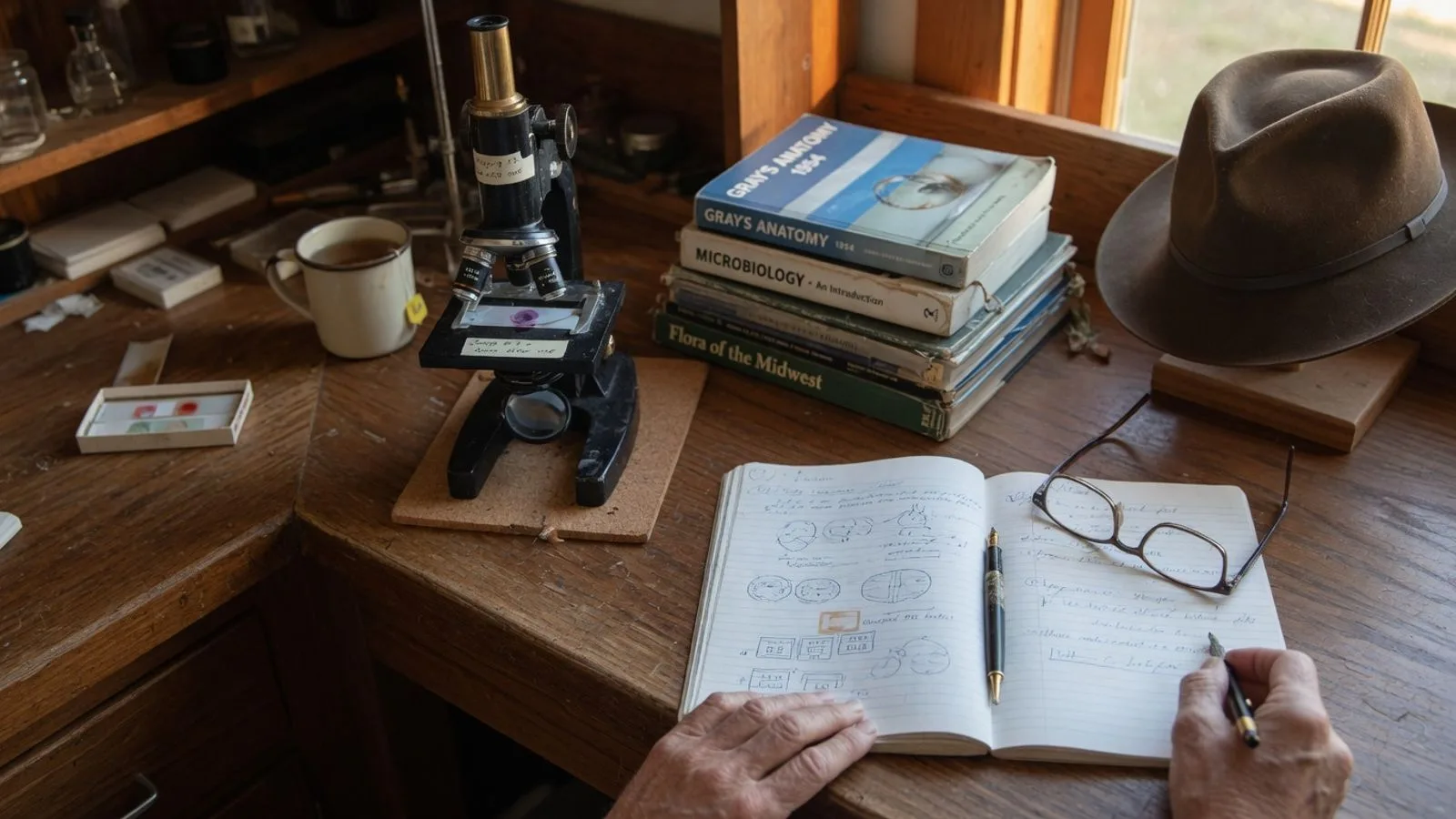
Leslie brings more than 30 years of teaching experience across homeschool co-ops, public schools, and university classrooms. She now focuses on helping learners build confidence in science through Bright Minds Learning. Her classes, workshops, and individualized instruction build hands-on science skills and provide advanced preparation for college-level science and pre-health study.
Her experience includes serving as an Anatomy & Physiology adjunct instructor, teaching lectures and labs, and A&P Laboratory Coordinator at Boise State University. In those former roles, she designed and ran a program spanning 27+ labs and more than 1,000 students per term. She brings that university lab experience to small-group learning, where every student gets time at the bench and direct feedback.
Before her public-school and university teaching, Leslie spent more than 20 years teaching across subjects and leading homeschool co-ops. She later taught biology in Idaho public middle and high schools. Biology and anatomy & physiology are her strongest specialties; her wider teaching experience helps her connect science with reading, writing, mathematics, and the world students notice. She brings those experiences together in practical instruction for individual learners and small groups.
Leslie’s graduate studies included soil science, with a focus on soil regeneration and conservation. That work shaped her strong commitment to caring for the land well and to working alongside agricultural communities for the good of the people they feed.
Leslie is gathering interest before setting class schedules. Families, schools, and co-ops can ask about science enrichment, anatomy and physiology, or preparation for further health-science study. Dates, locations, group sizes, duration, and fees for these programs are not yet confirmed. For school science support, see the tutoring options and published rates; appointments are arranged with Leslie.
Teaching philosophy
Students have ready access to textbooks, lessons, and videos through resources such as OpenStax and Khan Academy. These are valuable tools, but they cannot replace working with a real specimen in a small group under an experienced teacher’s guidance. That is the part that cannot be downloaded.
Across her teaching career, Leslie has developed an extensive collection of her own materials, including lab guides, dissection walkthroughs, microscopy keys, and notebook prompts written specifically for middle- and high-school students working with real specimens. She combines these materials with carefully selected college-level A&P references and free resources such as OpenStax. Students learn from materials suited to their age and experience.
Leslie teaches laboratory science through careful inquiry, practical work, and time to think. Her instruction follows a mastery-based model. Students move on when they can perform a technique, read a slide, and explain a conclusion, rather than simply because a week has passed. Students who master microscopy early may spend the following week helping a classmate. This strengthens their own understanding while allowing others the time they need.
The goal is not simply to cover content. It is to teach students how to reason through the scientific method on their own. They learn to ask clear questions, plan observations that could challenge their hypotheses, and examine a textbook, a research paper, or a specimen carefully. Students leave with a working lab notebook, practical experience, and the habits they need to continue learning independently after classes end.
Leslie taught her own children the same way. She presented evolutionary theory, intelligent design, and other explanations side by side and had them investigate each one with the Cycle of Scientific Enterprise: state the explanation fairly, ask what it predicts, and check the evidence. Her aim was for them to think and reason for themselves rather than borrow anyone’s conclusion. Bright Minds brings that approach to topics where families disagree; see how the course packs handle them.
Experience & credentials at a glance
A long teaching practice. A new way to share it.
Bright Minds is bringing Leslie's experience into a new offering for families and educators: direct instruction alongside course packs that make her planning, practical work, and assessment approach easier to explore. The approach has roots in her earlier teaching; the current packaged programs are still being developed and refined.
You do not have to take the method on faith. Look through a sample week, rubric, and model notebook entry, or talk with Leslie about instruction. These materials show how learning is intended to work; they are not testimonials or claims of measured results from the new programs. Student examples and feedback can be shared as they become available, with permission.
Why this experience matters. Leslie combines college laboratory expertise with experience teaching middle- and high-school biology. She has also spent 22 years leading a homeschool science co-op. Together, these experiences help her understand what students need and how to prepare them for more advanced work. They also inform the resources she is developing for other educators.