Most schools are having the wrong argument about AI. They are debating detection tools, restricted browsers, and honor pledges, as though the goal were to preserve a world in which take-home essays and lab reports still measure something. That world is gone. A student can now generate a polished, correctly formatted, mechanistically plausible writeup of an experiment they slept through. If your assessment can be defeated by a chatbot, the chatbot is not the problem. The assessment is.
This course takes the opposite posture, and it has two halves that only work together.
Half one: teach students to use AI well
We do not ban the tool. Banning it is both unenforceable and dishonest — the nurses, doctors, and scientists these students will become are already using AI every day, and a school that pretends otherwise is preparing them for a world that no longer exists. So we teach AI as an explicit skill:
- How to ask it to explain a mechanism in three different ways until one makes sense, and how to check the explanation against the textbook, because it will confidently invent things.
- How to use it as a tireless practice partner: "quiz me on the structures of the heart at increasing difficulty, then check my answers and tell me where my reasoning broke."
- How to spot when it is wrong (a muscle attached to the wrong bone, a vessel draining the wrong way, a made-up structure), which is itself a stiff test of whether the student actually understands the anatomy.
Used this way, AI becomes an accelerant for the Learn and Master stages. A student who can interrogate a model, catch its errors, and use it to drill themselves is learning faster than any previous generation could. We want that.
Half two: assess what the student can demonstrate
To make this approach work, grades do not depend on work a student completes alone with a screen. It comes from three in-person demonstrations a chatbot is structurally incapable of doing for them. Each maps onto one of the course's lab-notes essays.
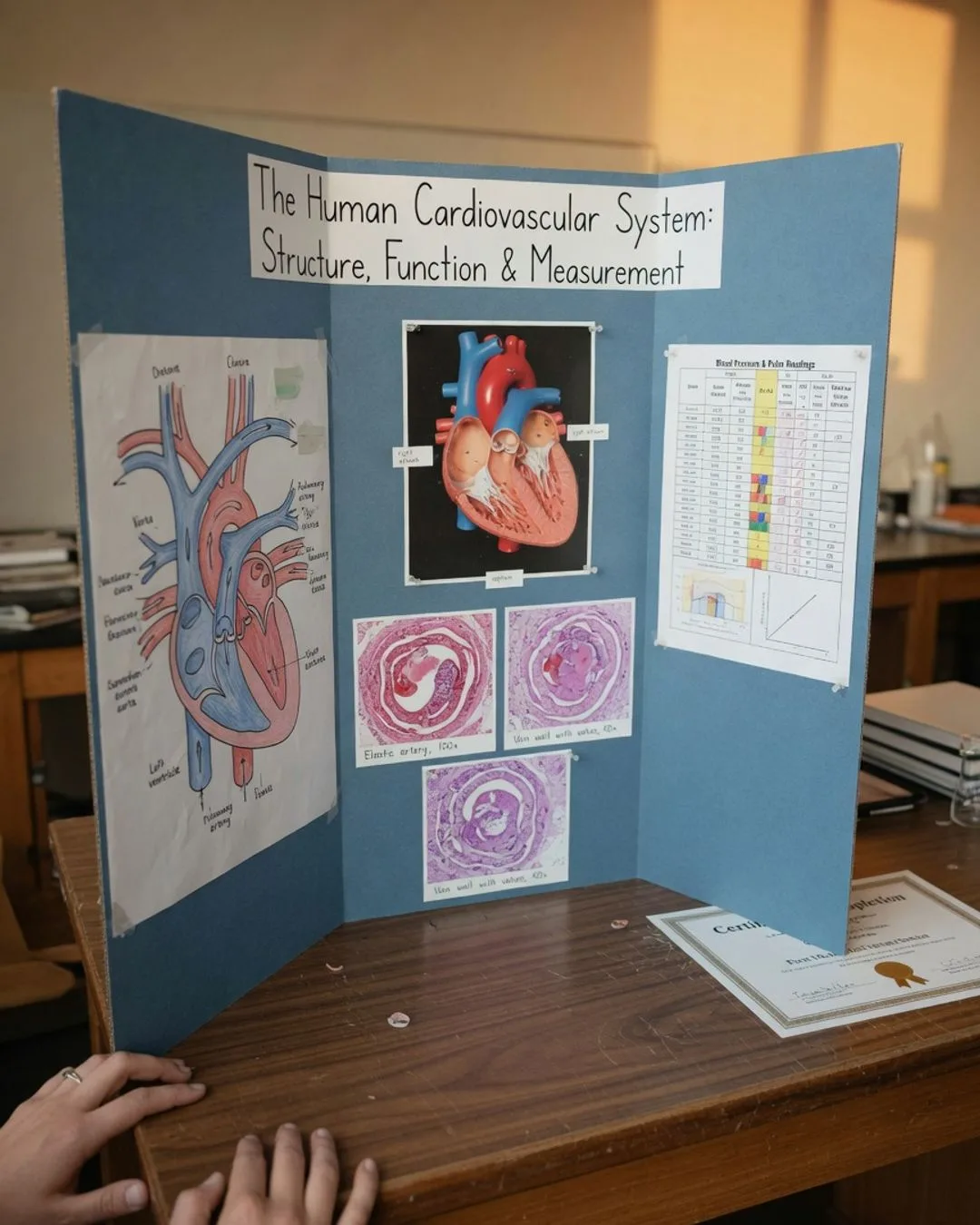
- The anatomy identification defense. The student locates and names structures on a model or specimen at the bench, then defends each one on the spot — what does this do? why is it shaped this way? what lies just deep to it, and why does that matter? AI can describe a heart. It cannot put this student's finger on the valve or answer for this student's specimen.
- The timed physiology case. Using a fresh fictional record, the student traces a pathway or critiques a physiological model and justifies each step. Publish level, references, timing, and accommodations first. This tests reasoning, not diagnostic authority; a clock alone is not proof of independence, and no personal or patient data is requested.
- The oral lab-notebook defense. The student sits across from the teacher and walks through their own notebook (this entry, this crossed-out reading, this anomaly) and explains the thinking behind it. Generated text has no memory of a Tuesday afternoon at the bench. The student's own notebook does, and so does the student.
We are not trying to build an assessment AI can't help with. We are building one AI can't replace the student in, because the assessment measures whether this person can actually do the anatomy.
Why this is the honest answer
The two halves need each other. Teaching AI without changing assessment just hands students a faster way to cheat. Changing assessment without teaching AI leaves them unprepared for the tools their field already runs on. Together, they resolve the tension completely: a student is encouraged to use every tool available to learn, precisely because the moment of accounting is a live one — their hands, their specimen, their notebook, their voice.
This is what we mean when we call the course AI-proof by design. Not walled off from the future, but built so that the future's most powerful tool makes our students more capable rather than less, so that when it comes time to show what they know, there is no screen to hide behind. Only the bench, and a person who can stand at it.