Course-pack preview. Explore the materials, then discuss subject readiness, student fit, and support with Leslie. Current program status and next steps.
Physics, taught at the bench.
Eight units from kinematics to fluids — lab-led, mastery-based, and built to advanced high-school rigor. A student doesn't pass this course by recognizing the right equation. They pass it by demonstrating, in person, that they actually understand it — stopwatch in hand, cart on the track.
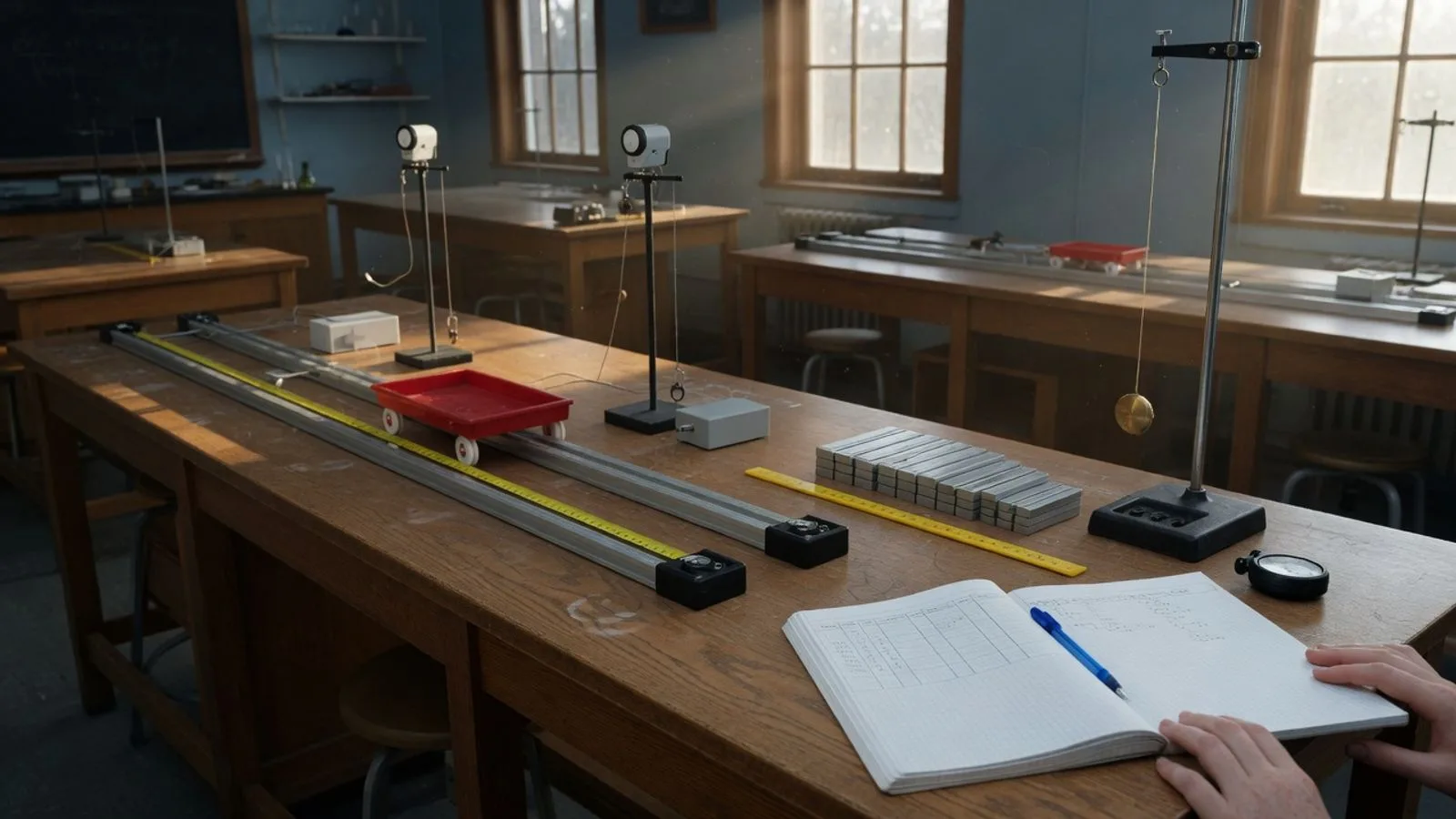
A full year of physics, built around what happens in the lab.
Most physics courses are a textbook full of equations with a few demonstrations bolted on. This one is the reverse. Every week is built around a question you answer at the bench — with a track and a cart, a pendulum, a stopwatch, a pair of colliding gliders, a spring you stretch and measure — and the reading exists to support that work. That is what "lab-led, not textbook-led" means, and it is the single most important thing to understand about how this course runs.
The course is organized as a two-day rhythm: a Concept Day where the idea is introduced and worked through on paper, and an Experiment Day where it becomes physical (timed, plotted, measured) and gets written into a real lab notebook. Between the two days, the student works at home, and that gap is where retention actually consolidates.
Mastery is the progression rule. A student advances through a concept when they can reproduce, explain, and apply it, rather than advancing simply because a week has passed. "Developing" is the honest, expected default; "mastered" is earned and demonstrated. The rubrics are the instrument that makes that judgment fair and repeatable.
Eight units, in the order they build.
The concept graph runs from how things move up to how forces play out in fluids. Each unit has its own mastery rubric; the full sequence, with the labs and the two-day rhythm, is on the course map.
A year at the bench, not behind a screen.
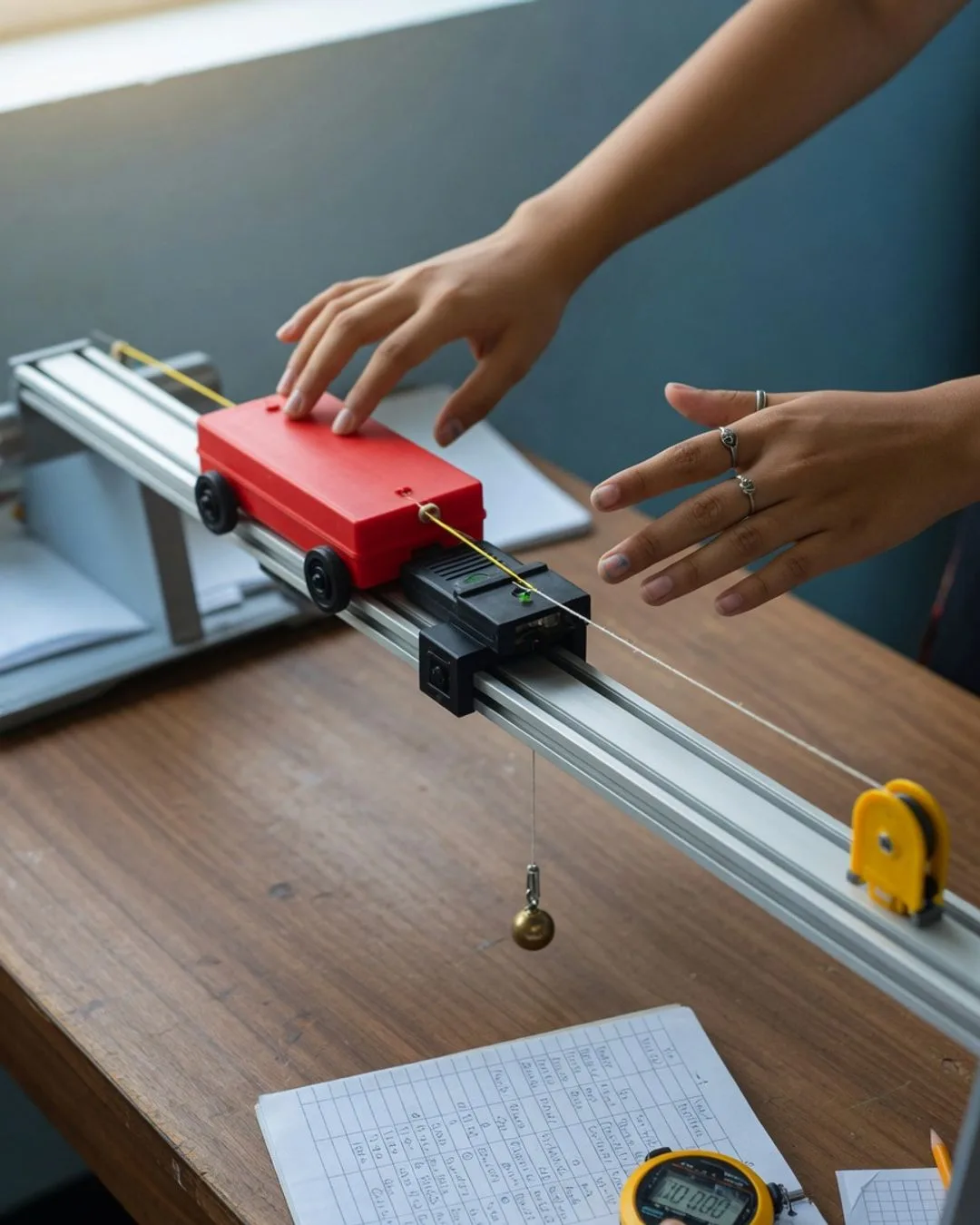
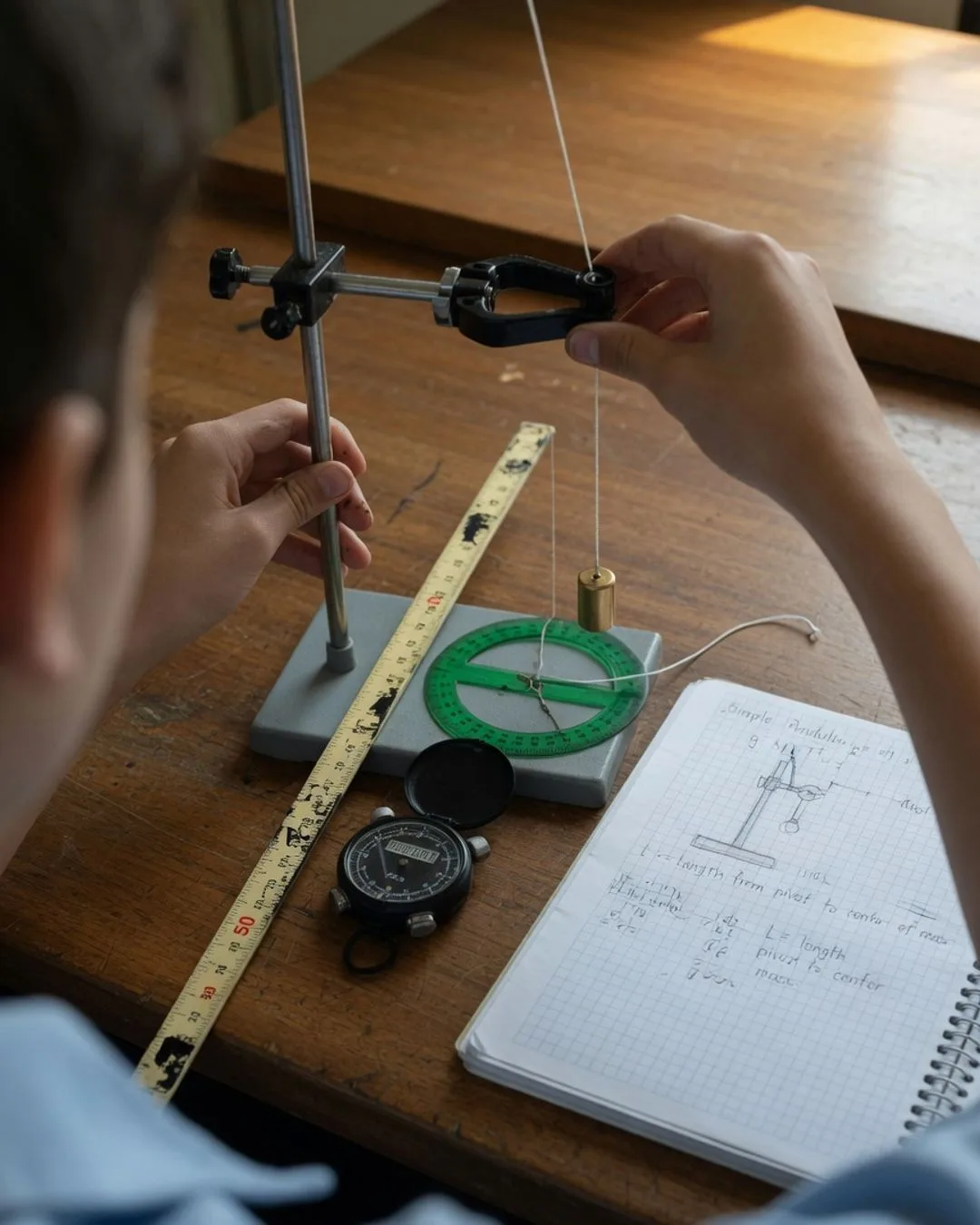
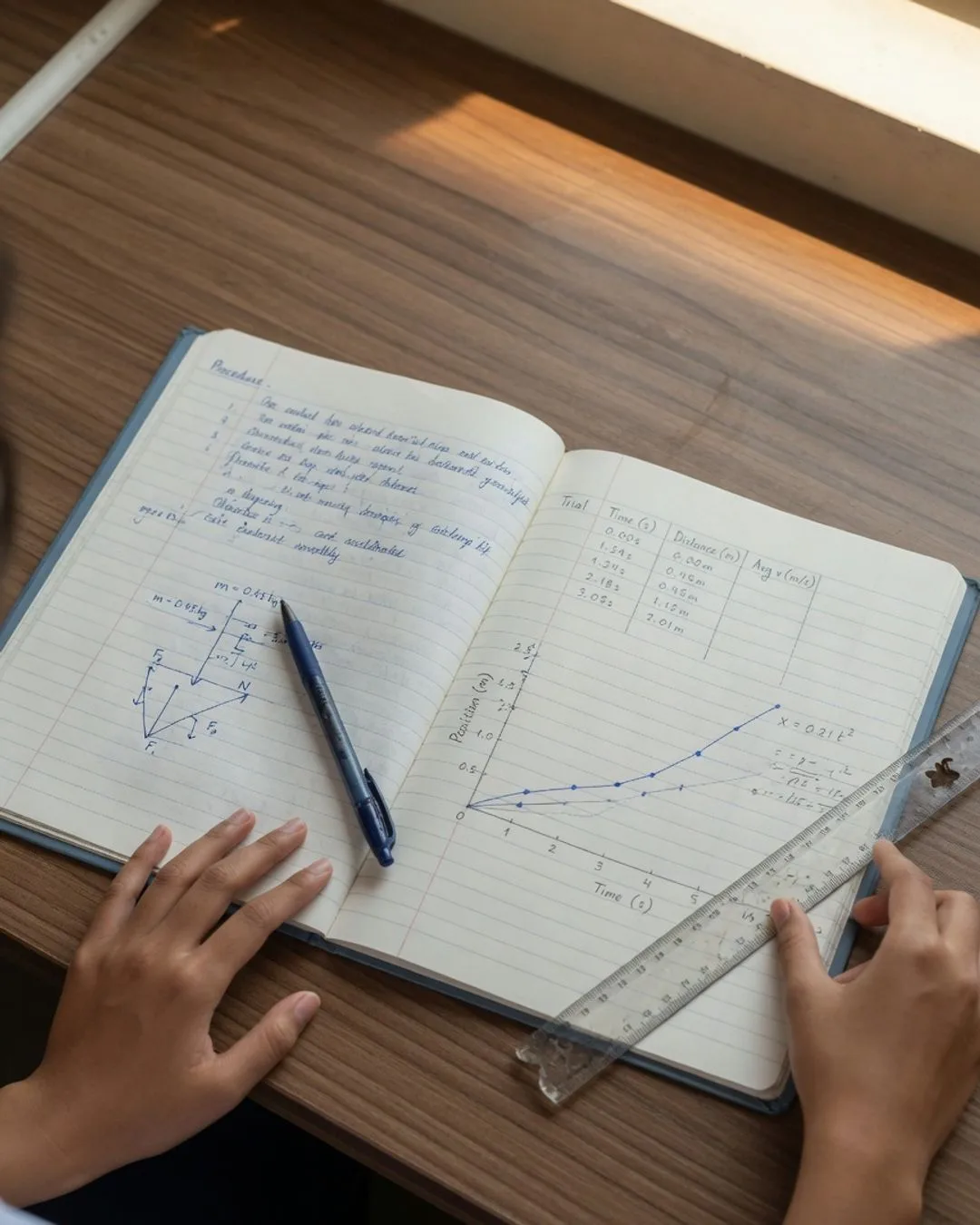
Three doors into the pack.
The course map
The full eight-unit sequence, the labs, and how the two-day rhythm plays out across a school year.
The resources
Every artifact you need to run the course: rubrics, study system, pre-lab checklist, AI-use guide, and more.
The lab notes
Six short essays on why physics is taught this way, with the reasoning explained in plain language.