Course-pack preview. Explore the materials, then discuss subject readiness, student fit, and support with Leslie. Current program status and next steps.
Scientific Method & Lab Skills, learned by doing.
Eight skill units, from careful observation to communicating and defending findings — a progressive ladder where each skill is mastered by doing it. This is the foundation every other Bright Minds science pack is built on. A student doesn't pass this course by recognizing the right answer. They pass it by showing, in person, that they can actually do the work of science — notebook in hand.
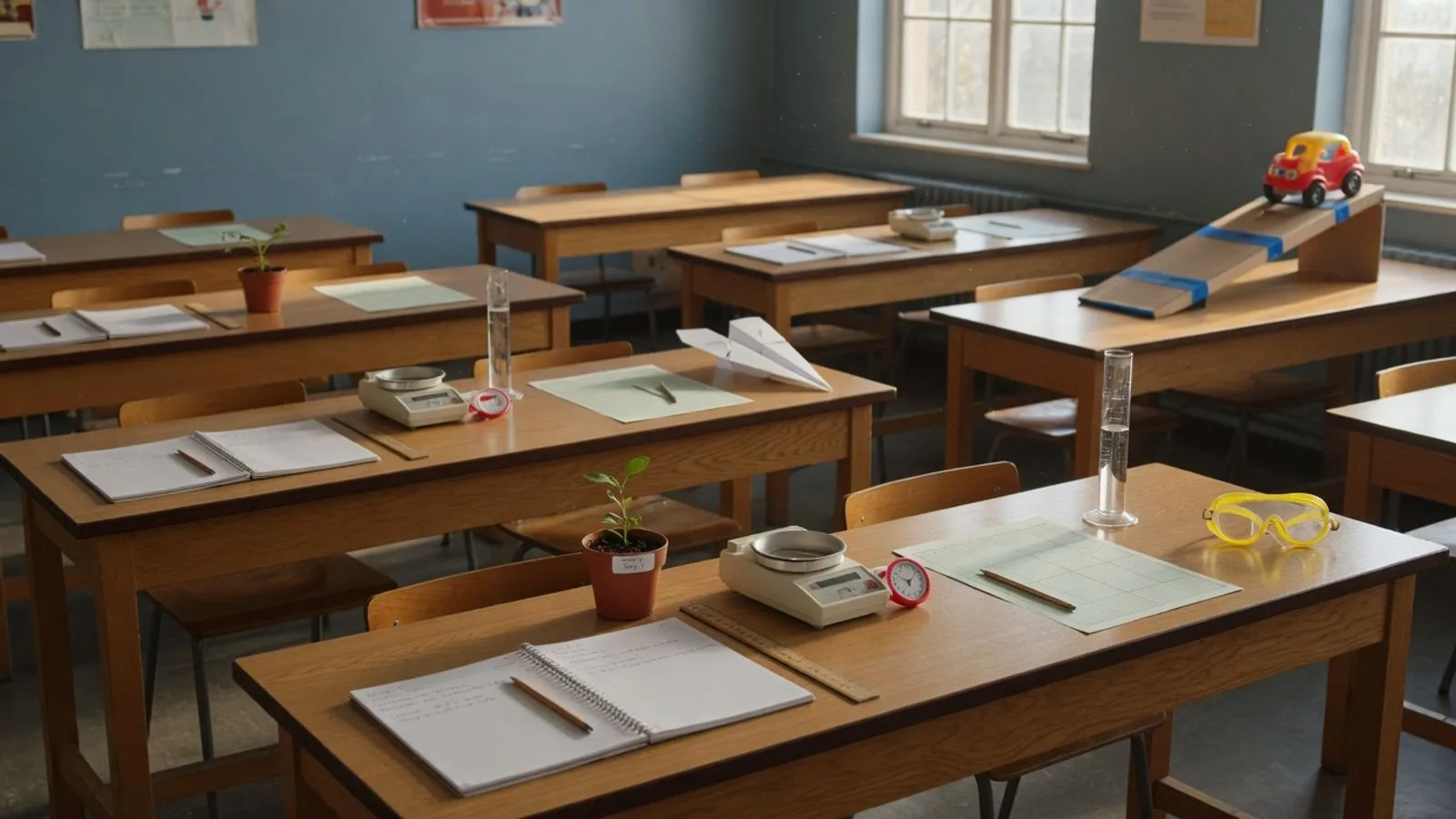
A full year of lab skills, built around what a young scientist actually does.
Most first science courses are a textbook full of facts to memorize with a few activities bolted on. This one is the reverse. It doesn't teach a subject — it teaches the craft of science itself: how to observe, record, measure, design a fair test, graph what you find, and say honestly how sure you are. Every week is built around something you do with your hands — timing how long ice takes to melt, measuring how far a toy car rolls, watching a seedling lean toward the light — and the reading exists to support that work. That is what "lab-led, not textbook-led" means, and it is the single most important thing to understand about how this course runs.
The course is organized as a two-day rhythm: a Concept Day where a skill is introduced and modeled, and a Practice Day where the student does that skill hands-on (taking the measurement, running the test, plotting the graph) and writes it into a real lab notebook. Between the two days, the student works at home, and that gap is where the skill actually sticks.
Mastery is the progression rule. A student advances when they can do the skill, explain it, and apply it to something new — not when the calendar says so. "Developing" is the honest, expected default; "mastered" is earned by a watched performance. The rubrics are the instrument that makes that judgment fair and repeatable.
Eight units, in the order they build.
The skills form a ladder — observe, record, measure, design, graph, quantify uncertainty, work safely, then communicate. Each rung depends on the one below it. Each unit has its own mastery rubric; the full sequence, with the hands-on activities and the two-day rhythm, is on the course map.
A year at the bench, not behind a screen.
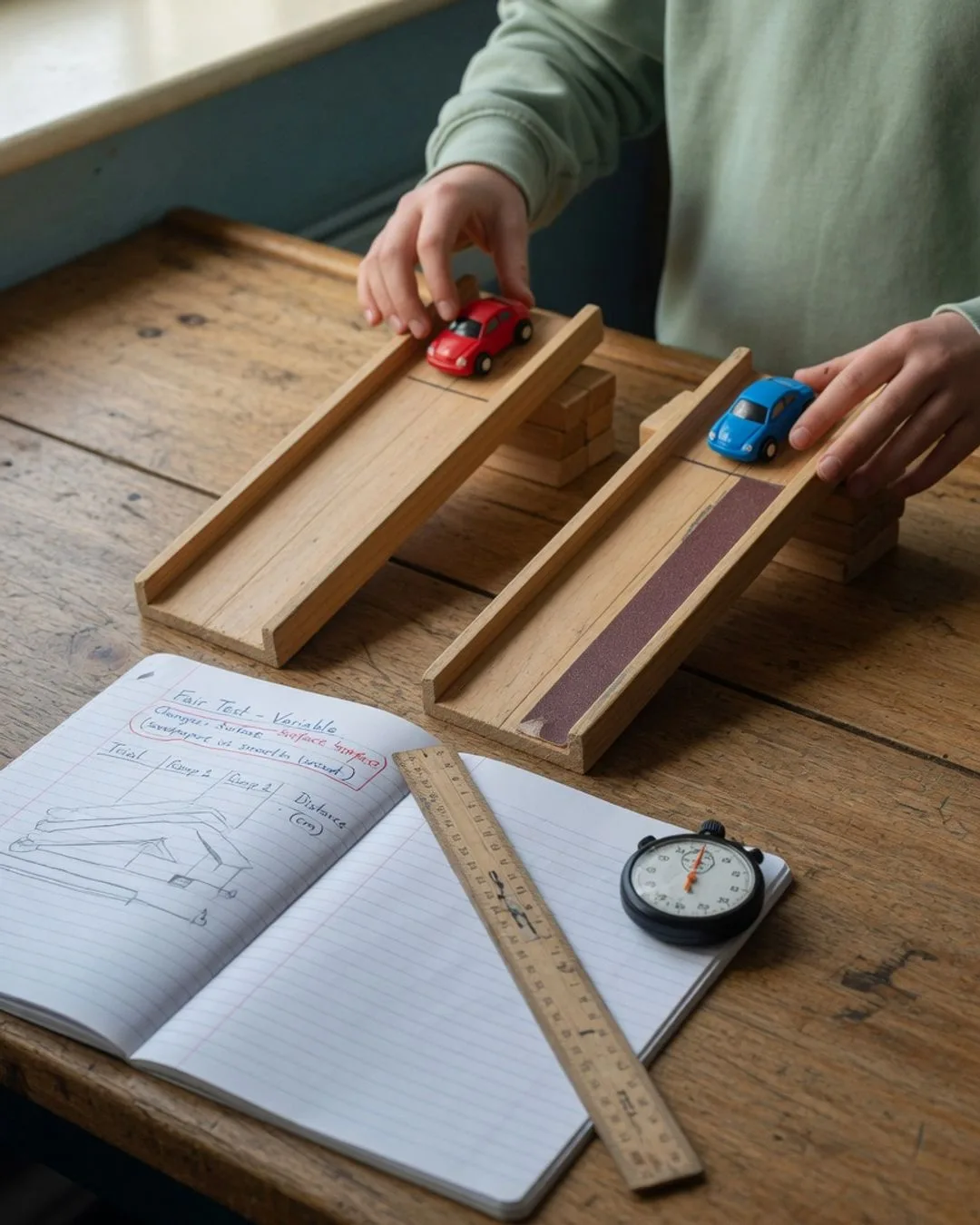
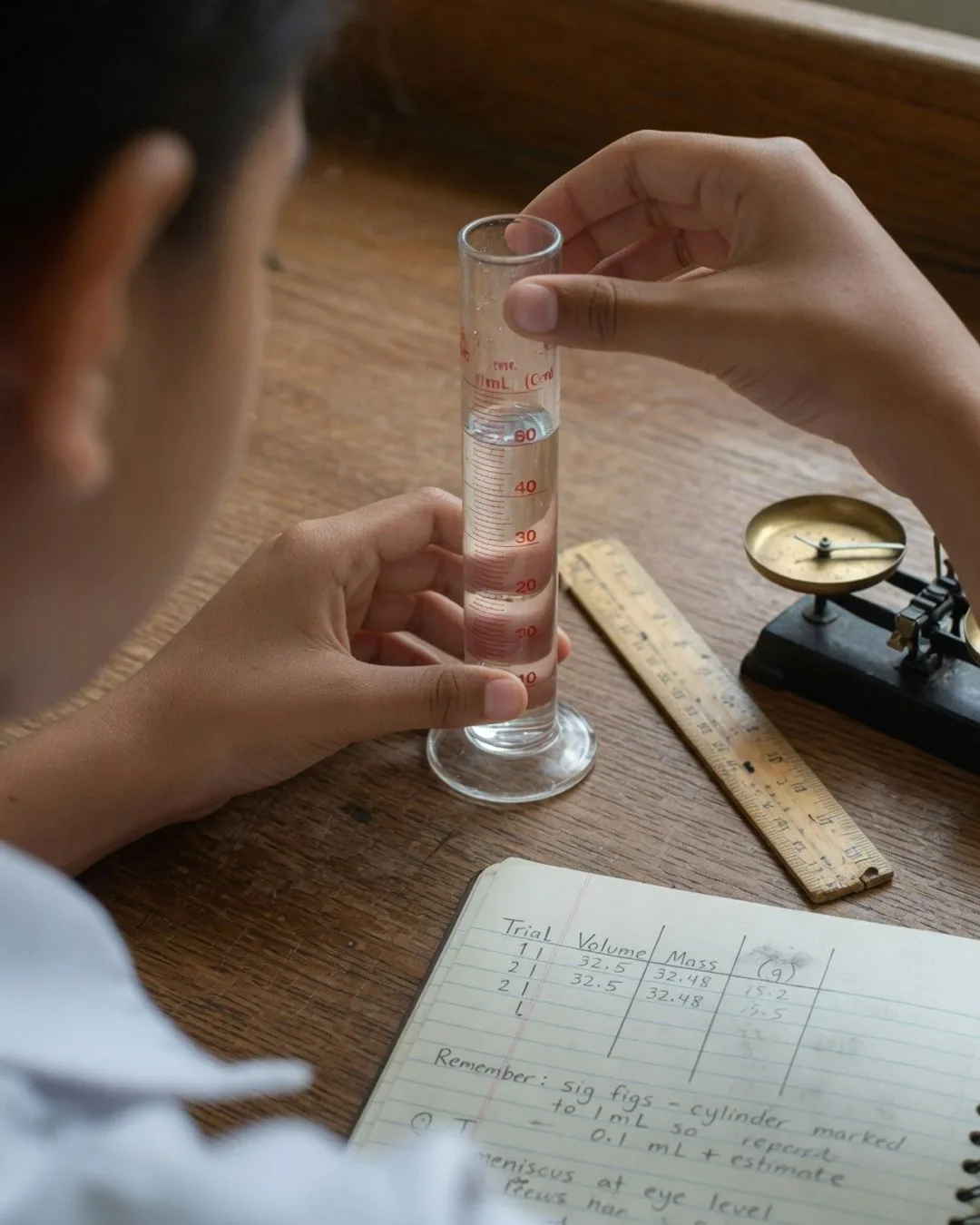
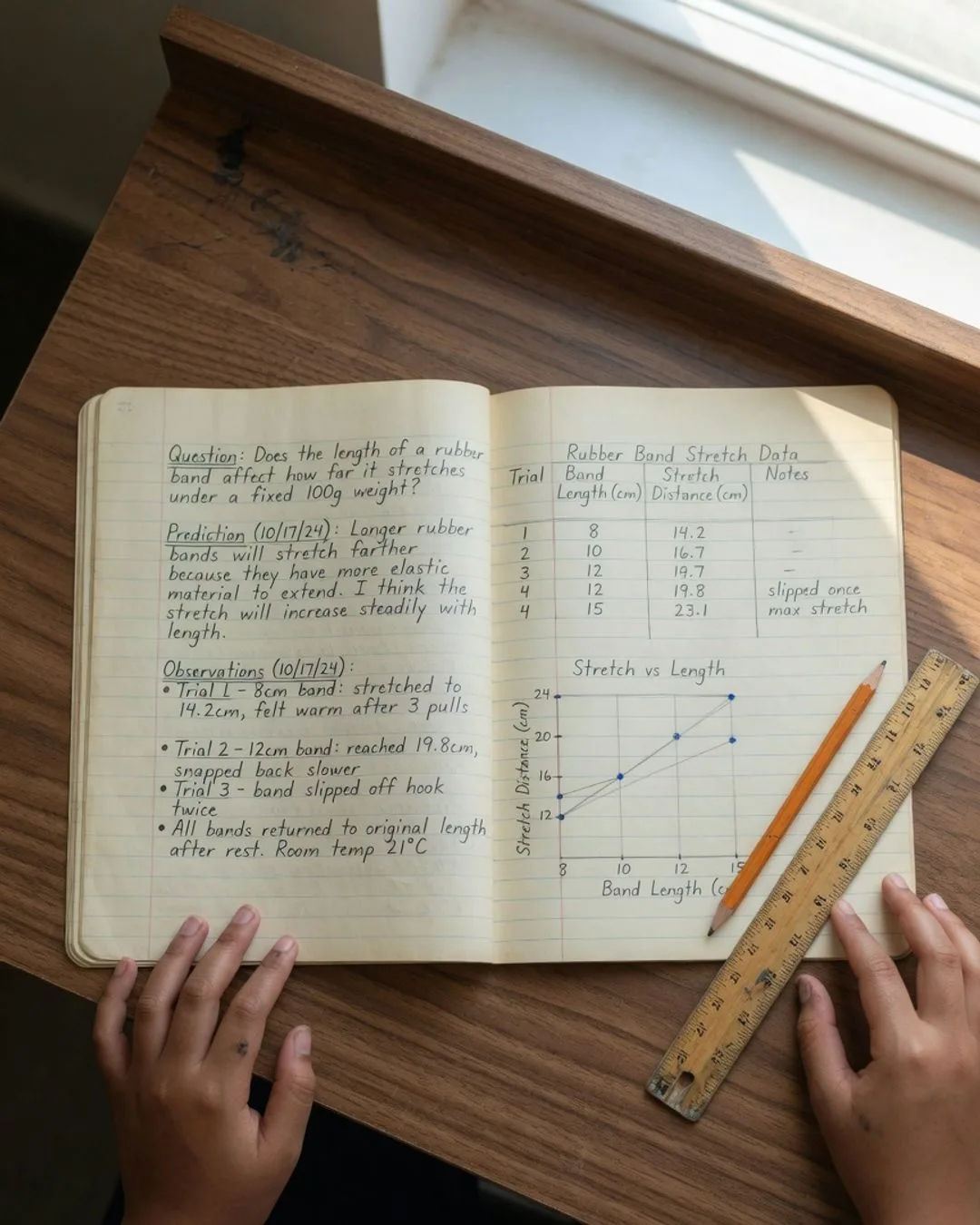
Three doors into the pack.
The course map
The full eight-unit sequence, the labs, and how the two-day rhythm plays out across a school year.
The resources
Every artifact you need to run the course: rubrics, study system, pre-lab checklist, AI-use guide, and more.
The lab notes
Six short essays on why science is taught this way, with the reasoning explained in plain language.
Assigned unit readings, datasets, leveled tasks and public practice answers; investigation designs and evidence limits. Print student lessons separately from the five-page assessment packets. Broad book recommendations remain optional; assigned source responses are required.